Upgrading
Nonprofit Workplaces
Case Study
#2 of 8
Professional Development
Building a Leadership Pipeline:
How Investing in Professional Development Paid Off for
Make the Road Pennsylvania
Every employer dreams of staff loyalty like this. Wykeem says he plans to stay forever on the staff at Make the Road Pennsylvania (MRPA):

"I wouldn’t trade the work I’m doing for anything… I’m gonna be doing this until I retire, ’til I can’t do it no more… The amount that this organization has invested in me, I gotta give it all I got."
How did MRPA, a community organizing and voter engagement organization, engender such intense commitment? By making an extraordinary, sustained investment in professional development, and by treating that investment as core organizational infrastructure rather than a perk.
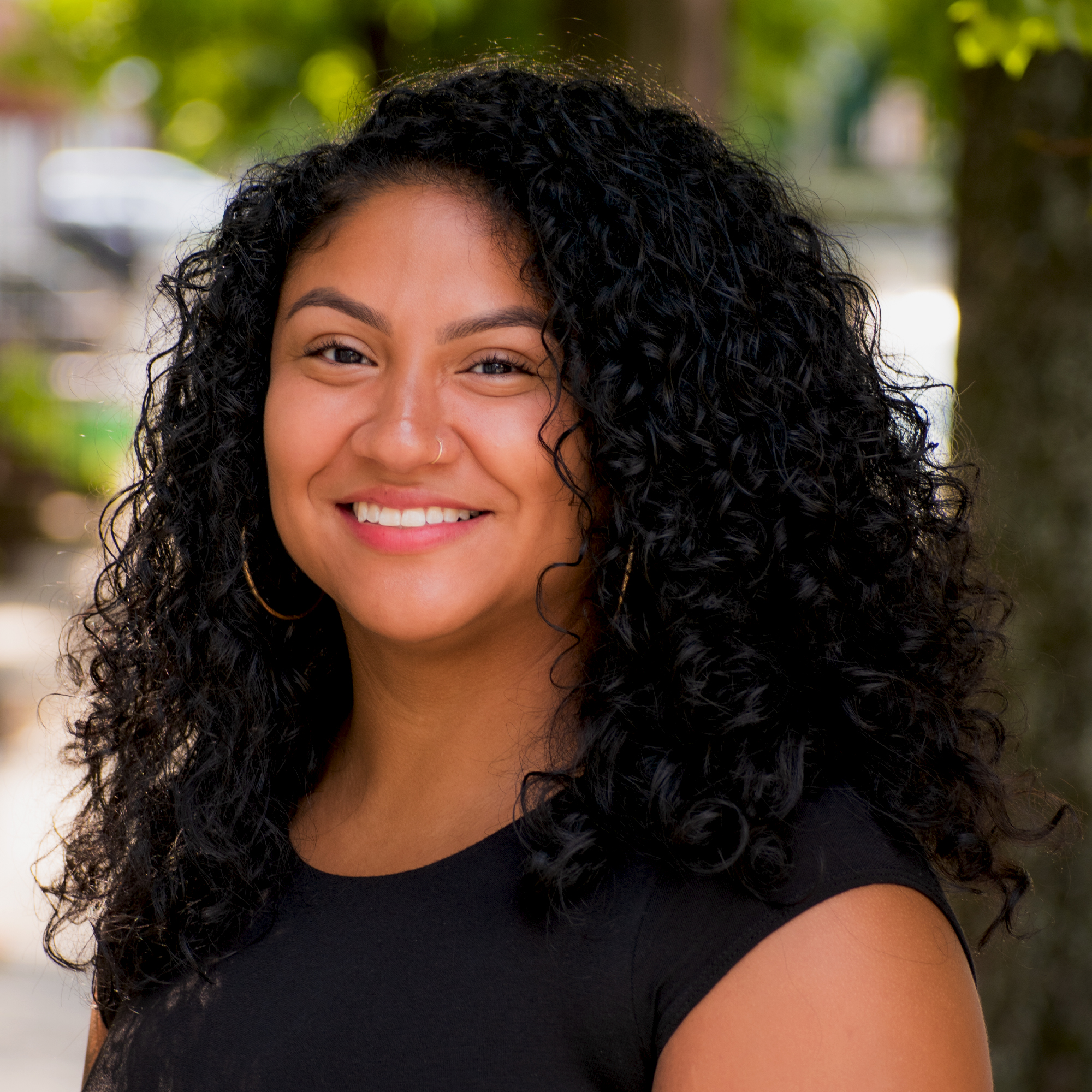
Maegan Llerena
Wykeem (who prefers to be identified by his first name only) gives much of the credit to Maegan Llerena, who recognized his skills and leadership potential and promoted him.
Their relationship is just one example of a broader pattern at MRPA over the past eight years: staff members have been promoted and mentored, and then they have turned around and given similar professional development support to others.
Maegan herself was an early beneficiary of MRPA’s professional development efforts. She joined the organization in 2018 as a part-time social work intern, rose to interim director and then executive director (ED), and now serves as ED of the umbrella organization, Make the Road States. The expansion of MRPA’s professional development system is inseparable from her own leadership journey.
That journey began during a period of internal crisis. An executive director had left abruptly, and it became clear that no one else (staff or board) had access to core systems such as fundraising records and financial management. The organization was fragile, overextended, and underprepared. While leadership gaps were obvious, early attempts to fill them through external hires failed. Instead, responsibility fell heavily on the shoulders of the small staff, including Maegan, who were coping under intense pressure.
At the time, Kati Sipp was working with MRPA as a consultant to address its internal dysfunction. She quickly recognized Maegan’s potential and began mentoring her intensively. “After about six months, I said to the national person, ‘I think Maegan is now ready for the [ED] job’,” Sipp recalls. “She had grown into it… She is an extraordinary leader, in my experience.”
Maegan is candid about how many gaps in her skills and knowledge she had at that point. Her first priority as ED was to hire a deputy Political Director and an Organizing Director, committing to building leadership capacity below her rather than carrying everything herself.
MRPA then entered a period of rapid growth, expanding from 8 to roughly 30 staff as Pennsylvania became a focal point in national elections. As the organization scaled, professional development moved from something informal and reactive to a central part of Maegan’s job. “Staff development became a core part of my work,” she explains. “My dream was always to figure out how to build staff internally, because it’s so hard to find bilingual people with the right skills who want to do this work. There are so many good people. If you make time to develop them, it’s possible. You don’t have to search endlessly.”
Early training had been largely informal, such as weekly check-ins between Maegan and her mentor Kati, but the stress of figuring everything out alone convinced her that other staff needed more structured support. Since she planned to leave the organization after five years to complete her social work degree, she used that time intentionally to prepare successors. She cultivated the Political and Organizing Directors, Patty Torres and Diana Robinson, to become future co-executive directors, the roles they hold today. She brought them to funder meetings to ensure they received mentoring and training in every unfamiliar aspect of MRPA’s work.
By the time Maegan became executive director in 2019, MRPA was ready to formalize these lessons into an organization-wide system. Professional development became a deliberate, budgeted strategy rather than a collection of ad hoc opportunities. Here are the core practices of the MRPA approach:
- Budget for mentoring at every promotion. Each step up comes with formal coaching or mentoring, so new leaders have been supported rather than expected to learn entirely on the fly.
- Create mid-level leadership roles. New positions such as field coordinators and lead organizers have distributed responsibility, clarified career pathways, and reduced the burden of top managers.
- Invest in external training. Staff have been encouraged to request skill-building opportunities, even when those skills might prepare them for future roles outside the organization.
- Require knowledge-sharing and cross-training. Staff returning from trainings have been expected to teach what they learned to others. Department heads, as well as outside facilitators, lead cross-training at meetings and retreats.
- Be transparent about funding. All department leads have been briefed on their department’s funding sources and expectations, connecting daily work to organizational sustainability.
- Post jobs internally first and give feedback. Internal hiring has been paired with clear feedback for unsuccessful candidates, making growth paths visible over time.
Together, these practices have created a culture in which learning is expected, supported, and shared. Professional development has not been simply an individual benefit; it has become a strategy for sustaining MRPA as it scaled.
Importantly, MRPA understands intensive professional development as a core diversity, equity, and inclusion practice. “Representation mattered to me. I wanted leadership to reflect our communities,” Maegan explains. Hiring bilingual staff has been a priority, and promotions have been paired with serious investments in skill-building.
Maegan points with pride to Wykeem’s trajectory. A Black canvasser from Philadelphia, he was promoted into statewide data coordination – a highly technical role that is typically held by white men in many organizations – and received intensive training in spreadsheets, formulas, and the America Votes voter-tracking software. He attended multiple out-of-state workshops, including trainings by Every Vote Counts, and continues to receive weekly coaching from the former field director who previously ran the data operation, even though that person no longer works at MRPA.
Wykeem’s relationship with MRPA began at a membership meeting, where he was struck by the organization’s focus on the problems facing his low-income Philadelphia neighborhood. He was hired as a seasonal canvasser and, after three years, was surprised to be promoted to field organizer, responsible for training and supervising other canvassers. Other grassroots members followed similar paths, with seasonal canvassers moving into management roles and forming a steady internal leadership pipeline.
MRPA staff sometimes joke, or complain, about the number of meetings and skill-building sessions. But at every level of the organization, people now understand how their work fits into broader program goals and can flex to cover for one another when needed.
These professional development practices have strengthened MRPA’s ability to weather today’s political storms. By investing deeply in its people, the organization has grown from a fragile operation into one marked by exceptional staff loyalty, shared leadership, and deep community roots.
Wykeem offers this advice to other nonprofits: “I believe that the way to actually get something good out of your org is you have to invest in your people. So if you take the time and the resources and invest that into the staff that you currently have, you’ll be so much more surprised how much more work and how much [more] productive your program will actually run.”
The Case Study series is the latest component of the Upgrading Nonprofit Workplaces study. Its purpose is to give examples of the practices in the Sustainable Jobs Toolkit, co-created by All Due Respect and the Staffing the Mission project, now part of Fund the People. For more best practices for Professional Development, see the Toolkit here.
Written by Betsy Leondar-Wright, Ph.D.
With research assistance from Nikki Mirala
Published by Fund the People
In collaboration with All Due Respect