Upgrading Nonprofit Workplaces
Case Study
#6 of 8
Caring Workplace
Growing a Culture of Collective Wellbeing
When you hear about a workplace wellness program, what do you imagine?
Yoga classes in the office? A team-building staff retreat? A stipend that can be used for gym memberships or massages?
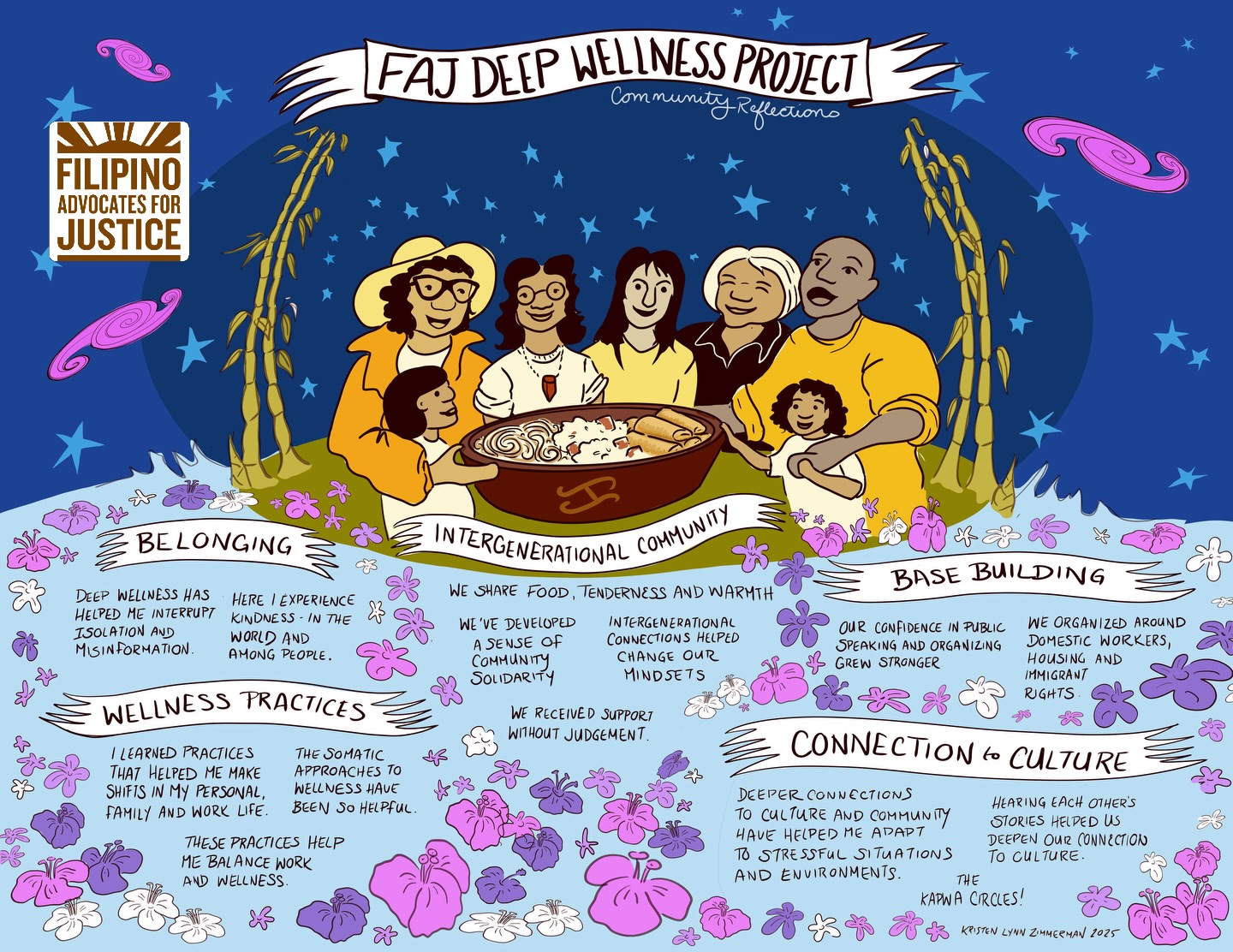
Filipino Advocates for Justice (FAJ) has offered those as part of its 5-year-old Deep Wellness Project. But such wellness activities are only a small part of the comprehensive cultural and compensation makeover that has transformed burnout culture into one supportive of staff members as whole people.
The pandemic was overwhelmingly difficult for the staff of FAJ, who both organize and serve their own communities. Filipina nurses and other caregivers died from COVID in disproportionate numbers; as a result, many FAJ employees lost family members. The scapegoating of Asian immigrants and Asian Americans, erroneously blamed for starting the pandemic, left some staff members terrified of anti-Asian violence. Working remotely sometimes resulted in isolation for those traumatized and grieving employees.

Nurj Kaalim
To make matters worse, the community members FAJ helps and mobilizes—Filipino and other Asian and Pacific Islander (API) immigrants, tenants, youth, domestic workers and other voters in the Bay Area of California—faced the same crises and were in urgent need of difficult-to-provide help, leading to secondary trauma for the staff who served them.
In addition, low salaries forced some staff to work second jobs to afford the soaring housing costs in the Bay Area. Organizer Nurj Kaalim drove for DoorDash because she couldn’t pay her bills on her below-living wage $48,000 salary; she describes her state at that time as “emotionally and physically drained.” Turnover climbed higher and higher, and productivity sagged.
Executive Director Geraldine Alcid was determined to revitalize her staff’s wellbeing. Fortunately, the multiple crises brought an influx of funding, in part from federal and state COVID relief programs, but also from private foundations that increased their giving in response to the post-George-Floyd racial reckoning, Asian hate crimes, and the pandemic. Like many nonprofits (especially in California, and especially those run by people of color), FAJ’s revenue rose after 2020, and the staff grew from 8 to 25. This revenue enabled Geraldine’s vision of a Deep Wellness Project for staff to come to fruition. One of the first consultants she hired in 2021 was registered nurse and acupuncturist Karen Villanueva, who has shepherded the project’s development.
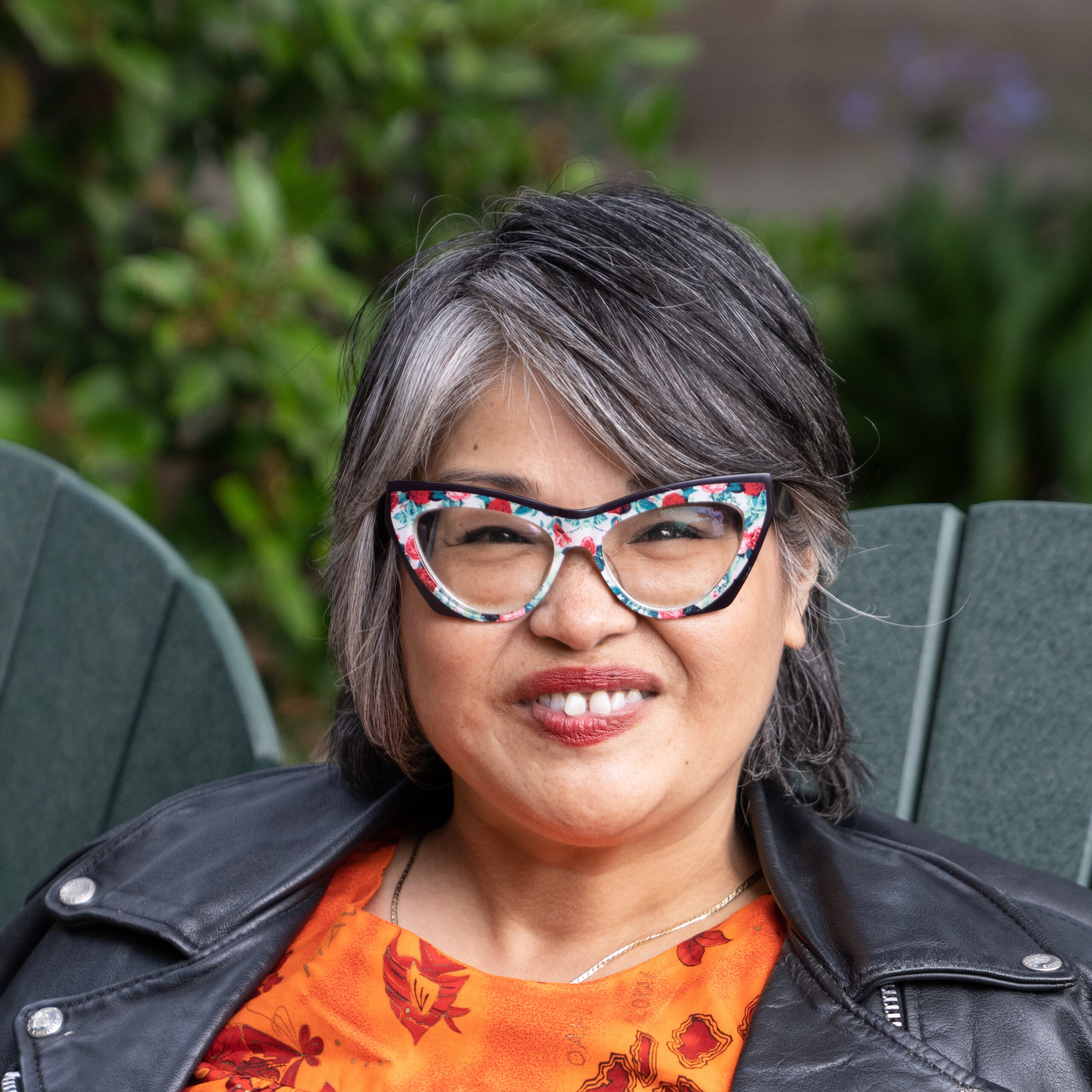
Geraldine Alcid
A strategy retreat in 2022, including staff, board, and consultants, inspired the most innovative move that FAJ made: convening a Healing Advisory Committee, a group of outside consultants, including masseuses, coaches and yoga teachers. Karen reports that Geraldine “put up the ‘Bat Signal’—a callout to her healer friends to convene and say, ‘Hey, we need help. Our staff are dealing with multiple losses, grief, and stress, and our constituents are doing the same thing. Please help us make sense of this. How do we get through it?’"
Since the Healing Advisors came on board, their supportive offerings to staff and volunteers have included not just embodied practices such as self-acupressure and meditative walking, but also sessions on sleep, digestion, and courageous conversations with family members.
But when Nurj describes how much more supportive the FAJ workplace has become, she doesn’t emphasize those wellness activities. First and foremost in her mind are the pay increases she received, allowing her to drop her side gigs and focus entirely on her FAJ job. Geraldine says her first priority was enabling the staff to afford the cost of living in the Bay Area (one of the most expensive areas in the US) by lifting the minimum salary to $60,000—only $1,000 lower than her own salary at the beginning of the upgrading process. The organization has offered regular raises since then; they’ve formalized pay bands and made them more transparent. Geraldine’s starting point in advancing staff wellness was to stop the organization from adding harm to its overworked and underpaid staff.
For Nurj, the other most impactful aspect of FAJ’s transformation has been a culture shift away from the martyr mentality. She said, “As organizers, many of us were taught that if we're struggling, we should just think about how much more the people we're organizing are struggling… The Healing Advisory Committee challenged that mindset. They helped us understand that we can care for ourselves while also serving our communities. For me, that was genuinely transformative… Wellness isn't separate from movement work. It is movement work. If you're organizing from a place of exhaustion and depletion, it's much harder to build power.”
For example, when Nurj lost her mother to cancer, she got support from the Healing Advisory Committee, a Grief Support Group, the wellness stipend, and health insurance that covered therapy. She felt that the organization cared about her in a comprehensive way.
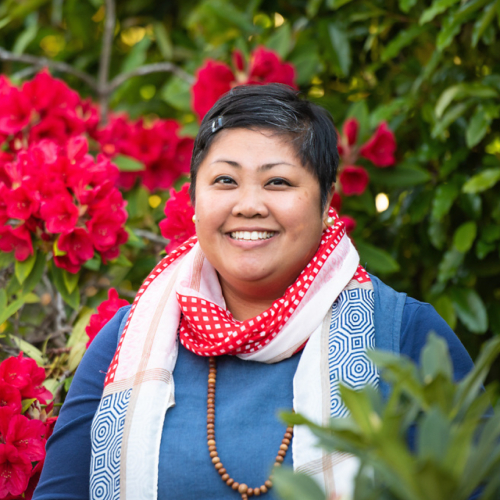
Karen Villanueva
Another indication that the Healing Advisory Committee’s wellness sessions are not the only essential element of FAJ’s caring workplace environment is the enthusiasm of those who don’t participate. Geraldine has insisted from the start that all activities are voluntary. In fact, some staff members are skeptics. Some requested “no meditation.” Karen, an original healing consultant, shared a funny anecdote about a staff member who said, "’My smoke breaks are my self-care’. And I said, ‘Okay. Regular breaks are good. Deep breathing is good. Smoking does involve deep breathing.’" Operations Director Henry Smith, who coordinated the project, joked that his wellness practices include "bad habits, retail therapy or a Coca-Cola at the end of a hard day”; but he says, “This is the best workplace I’ve ever worked at. Injecting joy and centeredness matters… There’s a deep care that goes throughout the organization.”
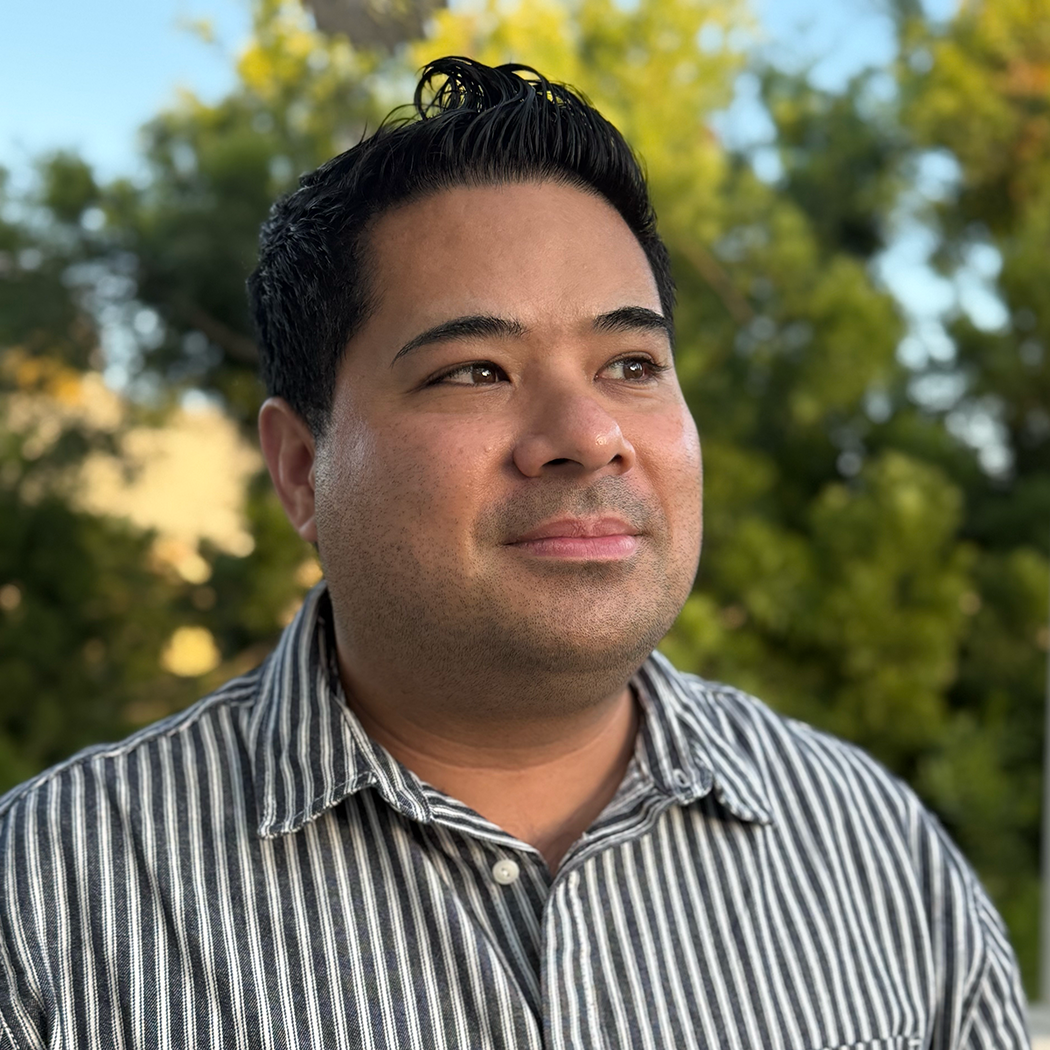
Henry Smith
Traditional Filipino culture influences FAJ’s typical approach to wellness. Food is always shared, sometimes along with information about healthy seasonal eating in the Philippines. Henry said, “Caring for yourself isn’t just the prescriptive, like, ‘Oh, treat yourself, go do a spa’. That’s the commercial, capitalist system telling you what will make things better. But we have to look at ourselves holistically... We look to Eastern medicine, acupuncture, medicines from the Philippines, things that we as colonized people have been separated from. So looking back at our history and connecting back to our roots, and also connecting with the community around us who are in healing practices.”
Geraldine described the Filipino tradition as “watching out for each other… a family sensibility.” Karen called it “relational” and says, “That's what's going to help us navigate all of the uncertainty and chaos in the world... Being relational in our work and in our movements. That's already deeply embedded in Filipino culture… Of course, every strength has a shadow side… Many [staff] people were conflict-averse, which is common in Filipino culture. We value smooth interpersonal relationships. Sometimes that means holding your tongue, especially around elders or people with authority… But when practiced with balance, relationship-building is one of our greatest cultural assets.”
What impacts has the Deep Wellness Project had on FAJ’s success at its mission? Most strikingly, Geraldine reports that a voter mobilization phone bank campaign rose from 7% of the goal at the organization’s lowest point, necessitating returning money to the funder, to a recent high point of ending a campaign early and hitting 107% of the target. She attributes this incredible improvement in part to the fact that temporary hires for seasonal campaigns are included in revitalizing activities. Before a big campaign, “we let them know, ‘Deep breaths’. ‘We will take breaks’. ‘You need to stay hydrated’. Those types of reinforcements… that you're not doing this alone… We make sure they’re fed. We’ve done chair massage sessions during phone-banking breaks. We’ve done decompression activities. One year they smashed pumpkins in our Union City garden after a campaign ended around Halloween.” More volunteers now become temporary staff who return year after year, and some then become permanent staff, as Nurj did. The enormous boost in programmatic achievement is a direct result of the investments that the organization has made in job quality, compensation, working conditions, and organizational culture for their workforce, including both voluntary and paid labor.
This internal culture of mutual support and wellness spreads to what FAJ offers to the wider Filipino and AAPI community, where many people are frightened of the anti–immigrant crackdown. Monthly ‘kapwa circles’ for multigenerational community members offer a mix of know-your-rights information with food, bingo, dancing or karaoke. (“Kapwa” is a Filipino word that Karen defines as “the idea that you are me and I am you. When I lift myself up, I lift you. When I lift you up, I lift myself.”) In addition, F4J now holds an annual Community Healing and Wellness event attended by hundreds of community members, where participants can sign up for appointments with practitioners of reiki, massage, yoga, acupuncture chiropractic, meditation, and hilot, a form of Filipino traditional medicine.
Recently a state of California grant allowed FAJ to offer such healing services to older Filipina domestic workers, including some live-in caregivers, who struggle with isolation, fatigue, and pain. Karen said, “We focused on sleep hygiene, pain management, nutrition, and self-care… There was also training on body mechanics—how to lift and transfer people safely. So it was a combination of wellness education and practical caregiving support.”
More generally, the ethic of care strengthens all of FAJ’s hybrid “Service-To-Organizing” work, in which staff relationships with the community and with coworkers are crucial. Karen said, “When you're building relationships and running campaigns, it's valuable to know yourself and know the people you're standing shoulder to shoulder with. When challenges arise—and they always do—you have enough trust and relationship to work through them.”
F4J's greatest innovation isn't that it found ways to make exhausted employees feel better. It changed some of the conditions that were producing exhaustion in the first place—and made care part of the organization's theory of change.
Across the nonprofit sector, burnout and other staffing challenges have not only remained high, but have risen dramatically since the pandemic. In response, funding for employee wellness has been a rising trend in recent years, such as the Thrive microgrants of the National Council of Nonprofits, and R&R: The Rest of Our Lives’ Breakweek grants. Most typically these are small, supplemental grants for burnout prevention benefits and one-off team-building activities.
Less common are grants for comprehensive investments in staff well-being that look upstream at the causes of burnout rather than just treating the symptoms, as Fund the People and our partners at the Do Good Leadership Collective advocate. Some funders have met with F4J to ask how to replicate the Deep Wellness Project for their grantees. After F4J issued a report about their Deep Wellness Project, it has been spotlighted by several organizations, including the San Francisco Foundation, All Due Respect, and the Fund the People Podcast. In all this coverage, the most eye-catching details are the Healing Advisory Committee and the stunning program successes. But equally important to the story are the many, many ways that employees now feel a sense of belonging and trust that the organization cares about them as whole people.
“I would say that in this particular moment—when there is so much chaos, uncertainty, and hopelessness in the world—funding …deep wellness within organizing work is an investment in the future. You're planting seeds that will be harvested later, but you're also harvesting benefits along the way. F4J is a perfect example of that. In a relatively short period of time, there have been significant gains—not only the intangible gains that can be difficult to measure, but also very tangible outcomes. My invitation to funders would be to recognize that this is a movement whose time has come. This is a way of doing organizing work that allows us to remain whole while we do it.”
- Karen Villanueva
The Case Study series is the latest component of the Upgrading Nonprofit Workplaces study. Its purpose is to give examples of the practices in the Sustainable Jobs Toolkit, co-created by All Due Respect and the Staffing the Mission project, now part of Fund the People. For more best practices for Caring Workplace conditions, see here.
Written by Betsy Leondar-Wright, Ph.D.
With research assistance from Nikki Mirala
Published by Fund the People
In collaboration with All Due Respect
March 2026